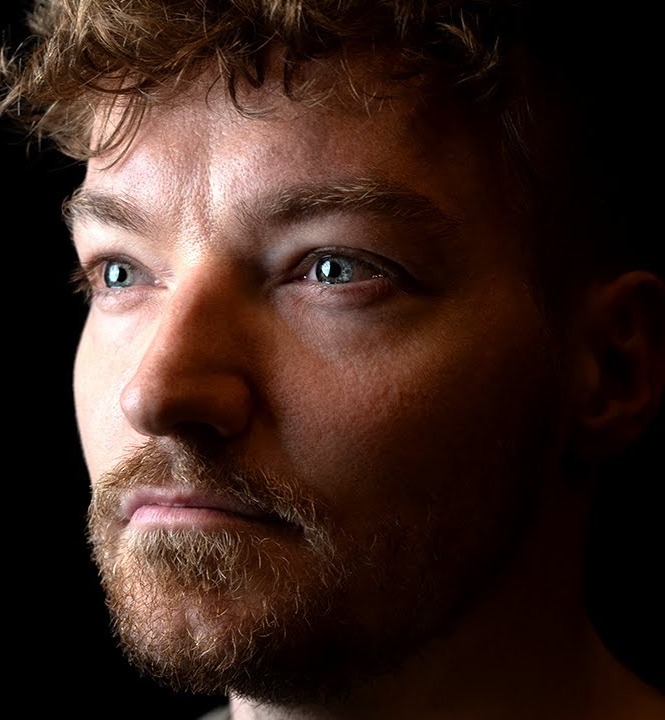
In November 2021, Pieter Levels posted a data point about his own career that became one of the most-shared statistics in independent software: “Only 4 out of 70+ projects I ever did made money and grew. >95% of everything I ever did failed. My hit rate is only about ~5%. So…ship more.”
The post was honest about the math. It was also — if you followed the reasoning — a strategy.
The challenge
In 2014, Levels set himself a public goal: launch 12 startups in 12 months. He was 28, from the Netherlands, self-taught as a programmer, and traveling the world while running low on money. The plan was to ship one product every month and see what connected.
The logic was blunt. He didn’t know which ideas would work. Nobody does in advance. The fastest way to find out was volume — build and release as fast as possible, charge for things from day one, and let actual paying customers determine the outcome.
He got the idea from Jennifer Dewalt’s “180 Websites in 180 Days.” But where Dewalt was learning to code, Levels was trying to find something that would pay him enough to keep going.
The 12-month challenge produced most of what became his portfolio.
What stuck
The fourth startup in the challenge was Nomad List: a platform ranking cities for remote workers by internet speed, cost of living, weather, and safety. The gap it filled wasn’t information about travel — there was plenty of that. It was decision-making infrastructure for a growing class of workers who wanted to know not where to visit, but where to actually live and work next.
Levels launched it as a public spreadsheet. Remote workers found it, started editing it, and eventually started paying for it. He added a membership model and kept building.
Today, Nomad List generates $15,000 to $25,000 per month in membership fees. Remote OK, his companion job board for remote positions, adds roughly $41,000 per month. Neither product has ever had an investor or a dedicated employee.
The technical choice
While the broader industry debated JavaScript frameworks and microservices architectures, Levels kept building in PHP — plain, unfashionable, unmistakable PHP. Inline HTML. Raw SQL. jQuery. No React, no Next.js, no TypeScript.
In March 2024, he disclosed that PhotoAI — his AI photography app, launched in February 2023 — ran on a single PHP file of 40,870 lines. The entire product operated on a Hetzner dedicated server with hosting costs of roughly $40 per month.
The choice was practical, not ideological. “The only real validation is people paying for your product,” he wrote in a post on his blog. The fastest path to that validation was the stack he already knew.
The product was AI-assisted professional photography: users uploaded photos of themselves; the app generated studio-quality portraits, headshots, and images in various styles and settings. The market timing was exact. AI image generation had just become genuinely impressive, and Levels was one of the first to build a clean consumer product around it.
PhotoAI crossed $100,000 in monthly revenue in August 2024, approximately 18 months after launch. By November 2025, it was generating $132,000 in monthly recurring revenue.
Three hours
In February 2025, Levels built something he’d never built before.
“I’ve never ever made a game before and just made my own flight simulator 100% with Cursor in I’d say 3 hours by just telling it what I wanted,” he posted on X on February 22, 2025, announcing fly.pieter.com.
The game was a browser-based multiplayer flight simulator — built in Three.js using AI coding tools: Cursor as the development environment, Claude and Grok for code generation. Players flew planes, dogfighted over a simple world with cliffs and a runway, and later over Mars. It was unpolished in the way early products often are. It was also immediately playable and genuinely fun, which is what matters at launch.
Within days of going live, the game went viral on X, reaching millions of users. By day 17, Levels posted the revenue update: “[fly.pieter.com] has now gone from $0 to $1 million ARR in just 17 days! Revenue update: $87,000 MRR (which is $1M ARR). My first project ever to go up this fast.”
The monetization model was in-game advertising: branded zeppelins, floating billboards, and terrain logos purchased by companies at roughly $5,000 per slot per month. By the time the product stabilized, 320,000 players had flown in it.
In a later reply on X, Levels described the shift in how he was building: “The plane game is almost fully AI written… And most of my code now is yes.”
The investor
Alongside his own products, Levels had been making small bets on tools through levels.vc, a personal fund. He invested in Cursor — the AI coding environment he had used to build a flight simulator in an afternoon.
On June 16, 2026, SpaceX announced it would acquire Anysphere, the company behind Cursor, for $60 billion. Levels marked the date as his first real investment exit.
The tool that helped him compress three hours of game development out of zero experience in game development had become one of the most valuable AI companies in the world.
The math
The “ship more” thesis is a probabilistic argument with an uncomfortable premise: the work of figuring out what will succeed can’t be fully front-loaded. Research, planning, and user interviews compress the failure rate somewhat. They don’t compress it to zero.
What Levels’ portfolio shows is that a 5% hit rate, applied to 70+ products over a decade of steady building, compounds into $3 million per year — maintained alone, debt-free, from wherever he happens to be.
Remote OK at $41,000 per month. InteriorAI at roughly $40,000. PhotoAI at $132,000. fly.pieter.com at $70,000–90,000. Nomad List. And now an investment exit from the coding tool that made the latest product possible.
The 70 failures aren’t the footnote. They’re the engine. The question the portfolio answers isn’t how to build the right product. It’s how to build enough products that the right ones eventually show up.
Related founders
- Michael Truell Built Cursor to $4B ARR. Then SpaceX Paid $60 Billion For It. — the coding tool behind Levels’ investment exit, built by four MIT students after a failed first attempt at AI for CAD software.
- Six Months, $80 Million: How Maor Shlomo Built Base44 Alone — another solo builder who turned an AI-first product idea into a $80M exit in under a year, without a co-founder or investor.
- Four Products, $1.99: How Damon Chen Turned Failure Into a $2M Bootstrapped Business — a founder who needed four failed side projects before building the one that worked, then bootstrapped it to $2M ARR.
- Yasser Elsaid Built Chatbase to $10M ARR, No VC, No Sales Team — a solo founder who posted a demo to 16 Twitter followers and built past $10M ARR entirely through product-led growth.
Direct quotes from Pieter Levels are drawn from his public posts on X (@levelsio): the “70+ projects / ~5% hit rate” post (x.com/levelsio/status/1457315274466594817, November 2021); the fly.pieter.com announcement (x.com/levelsio/status/1893385114496766155, February 22, 2025); the $1M ARR milestone post (x.com/levelsio/status/1899596115210891751); and his reply about AI-written code (x.com/levelsio/status/1912968982128456135). The “only real validation” quote is from his blog post at levels.io/idea-validation/. PhotoAI technical details (40,870-line PHP file, Hetzner server, $40/month) from Inspectural (inspectural.com/blog/levelsio-photoai-single-file-php/); revenue figures from Indie Hackers (indiehackers.com) and ppc.land. fly.pieter.com details from Indie Hackers and VibeCoding.Wiki. Cursor/SpaceX acquisition from Forbes, Bloomberg, CNBC, and TechCrunch (all June 16, 2026). Portfolio revenue figures from public sources including getlatka.com and LinkedIn.