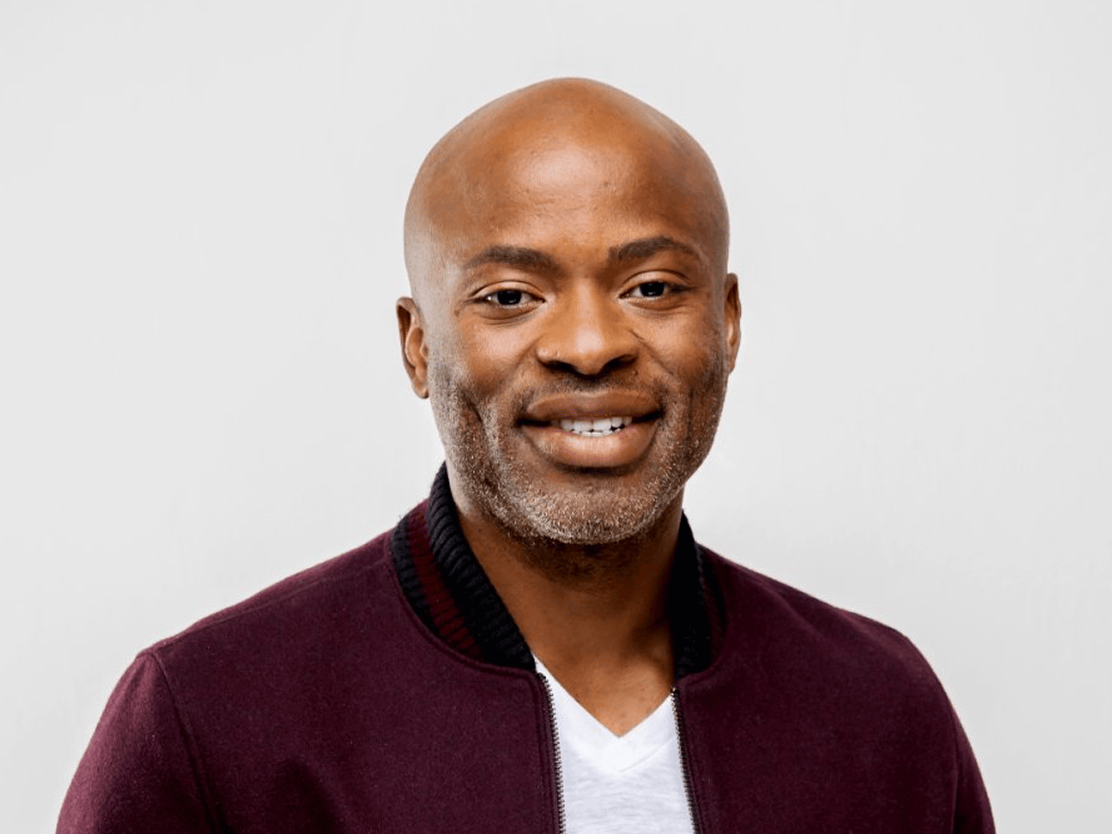
By 2013, Tope Awotona had already failed three times.
There was a dating website, started after he read a New York Times piece about the founder of Plenty of Fish. There was ProjectorSpot, which sold projectors. There was YardSteals, a platform for home and yard equipment. None of them worked. He was in his early thirties, selling software for EMC, and he was, by his own description, impatient with a problem nobody had bothered to solve: scheduling a meeting took a dozen emails and still went wrong.
“The obvious idea to me was that scheduling is broken,” he told Forbes.
The fourth business is Calendly. It became profitable in 2016, passed $100 million in revenue in 2020, and raised at a $3 billion valuation in 2021. But the decision that made it possible came earlier, and it was not a product decision.
Lagos, and the thing that does not leave
Awotona grew up second youngest in a family of seven in a comfortable neighborhood of Lagos. His father was a microbiologist who became a businessman; his mother worked at the central bank and ran a pharmacy.
When he was twelve, men followed his father home and demanded the car. His father threw them the keys. They shot him anyway. Awotona watched it happen. He has told Fortune the incident left him with PTSD and insomnia that persists to this day.
The family moved to Atlanta in 1996, when he was fifteen. He enrolled at the University of Georgia in computer science, switched to business and management information systems, and went into enterprise software sales — Perceptive Software, then Vertafore, then EMC, which Dell would later acquire.
“The only thing I could attribute it to”
When Awotona took the idea for Calendly to investors, it did not go well, and his account of why is unambiguous.
“I watched other people who fit a different ‘profile’ get money thrown at them for shitty ideas,” he told Inc. in 2019. “Those VCs were ignorant and shortsighted. The only thing I could attribute it to was that I was Black.”
So he funded it himself. He quit the EMC job. He emptied his retirement account, maxed out his credit cards, and took expensive small-business loans — roughly $200,000, which was everything he had.
“It could’ve gone really badly,” he told Forbes. “If you’re going to do something, you have to go all in.”
Kiev, February 2014
The engineering was contracted to a development firm in Ukraine. In February 2014, with the protests in Kiev turning violent, Awotona flew there to evaluate them in person. He would make the trip three times in total.
He has been candid about what that first one was like. “I was scared,” he told Fortune, recalling explosions audible from his hotel room. “But Calendly was my life. I felt like I had no option.” His own retrospective assessment: “Looking back, it was probably stupid for me to go.”
The year that followed was the near-death stretch. The premium version launched in 2014; the CTO left. “Those were the moments I felt like the whole thing could fall apart,” he said. Running out of money for payments infrastructure, in his account, “forced me to double down.”
Growth that arrived sideways
What eventually worked was not a sales motion. It was that Calendly’s product spread itself: every meeting booked through it put the tool in front of someone who did not yet have it.
“Employees sing the praises of our product to their higher-ups and it bubbles up,” Awotona told Forbes. Companies including Lyft, Ancestry.com, Indiana University, La-Z-Boy, CarGurus, and US Foods arrived that way — bottom-up, from individual users, into enterprise contracts.
The capital history stayed unusually thin for the outcome. Beyond his own $200,000, Calendly took a single seed round: $550,000 from David Cummings’ Atlanta Ventures in late 2013. That was the entirety of outside money until January 2021, by which point the company was profitable, had passed $100 million in revenue, and was doubling year over year. The round that followed was $350 million from OpenView Venture Partners and Iconiq Capital at a $3 billion valuation.
By 2022, Forbes put Awotona’s stake at a minimum of $1.4 billion — one of only two Black tech billionaires in the United States at the time, alongside David Steward of World Wide Technology. Cummings’ assessment, given to Forbes: “Tope could be the most successful African-American tech entrepreneur of his generation.”
The part that reads as principle
The founding of Calendly is usually told as a bootstrapping story, and it is one. But Awotona’s own framing is narrower and more interesting than “he didn’t need VCs.”
He needed them. They said no. So the $200,000 was not a philosophy about capital efficiency; it was the only door left, taken by someone who had already watched three businesses fail and was betting his retirement that the fourth would not.
“In my life, I’ve benefited from not taking the conventional wisdom,” he told Forbes. Which is the sort of line that sounds like a slogan until you match it against the record: a Nigerian immigrant who could not raise money, funded a scheduling tool out of his own retirement account, flew into a city with explosions going off to check on his engineers, and did not take another dollar of outside capital for seven years.
Related founders
- Six Months, $80 Million: How Maor Shlomo Built Base44 Alone — another founder who went without venture capital entirely and sold for $80 million on his own terms.
- Damon Chen: From $1.99 to Testimonial.to’s $2M a Year — the same shape of story at a different scale: a run of failures before the product that worked.
- Yasser Elsaid Built Chatbase to $10M ARR, No VC, No Sales Team — a bootstrapped SaaS founder who also let product-led growth do the selling.
Awotona’s childhood in Lagos, his father’s killing and its lasting effects, the family’s 1996 move to Atlanta, the three failed businesses (the dating site, ProjectorSpot and YardSteals), the February 2014 Kiev trip and the quotes about it, the 2014 CTO departure, and the pre-2021 funding total are per Fortune (November 19, 2020). His education at the University of Georgia, the pre-Calendly sales roles, the $200,000 of personal savings, the $550,000 Atlanta Ventures seed round, profitability since 2016, the 2020 revenue figure, the $350 million round from OpenView and Iconiq at a $3 billion valuation, the named enterprise customers, David Cummings’ quote, the $1.4 billion stake valuation and all Awotona quotes attributed to Forbes are per Forbes (Amy Feldman, April 6, 2022). The quote about VC rejections — “I watched other people who fit a different ‘profile’ get money thrown at them for shitty ideas” — is per Inc. (Cameron Albert-Deitch, 2019). Awotona has since been listed on Forbes’ 2026 America’s Richest Immigrants list; current revenue figures reported by third-party trackers are estimates and are not cited here.