Most founders who sell control of the company they built stop running it. Lucy Aylen sold control of Never Fully Dressed and is still in the building.
A market stall in Spitalfields
Aylen started the brand in 2009, at 23, the way a lot of British fashion labels start: with no capital and a sewing machine. “I used to customise items in my Mum and Dad’s attic to then take to sell at Spitalfields and Portobello,” she told TheIndustry.fashion — the two London markets where Never Fully Dressed’s early customers first found it, alongside word of mouth on Facebook.
It grew slowly and then not slowly. The brand’s wrap dresses and bold prints built a loyal online following; a first physical store followed in Essex, then a flagship in east London and one in New York; wholesale accounts opened at John Lewis, Frasers and Harvey Nichols. In 2024, Drapers named Never Fully Dressed its Womenswear Brand of the Year. Seventeen years after the attic, Aylen had built a company with international reach and no Wikipedia page — the kind of founder story that gets written up in fashion trade press but rarely gets a deep, independent look at what happens next.
What she gave up, and what she kept
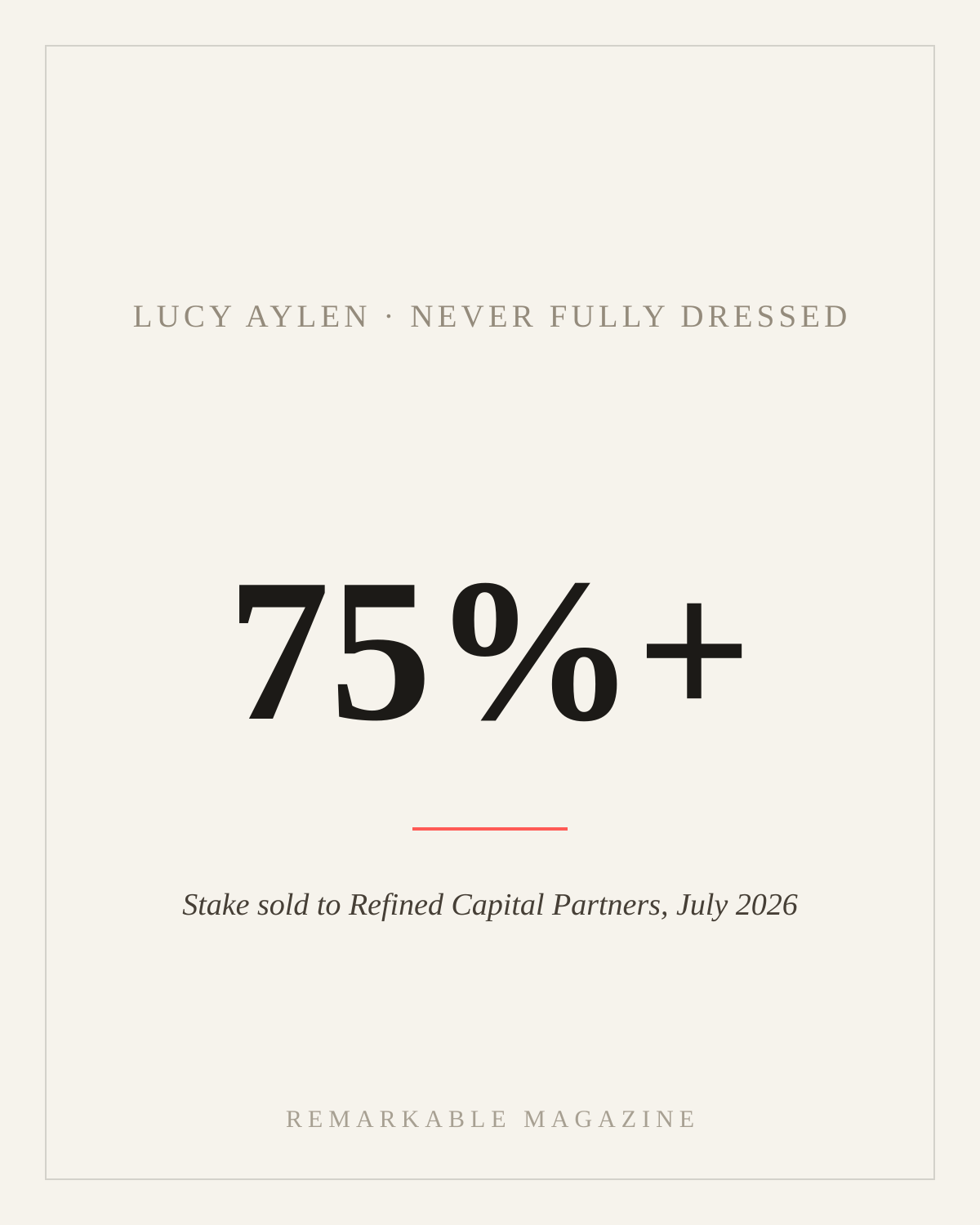
What happened next is on the public record. UK Companies House filings for Never Fully Dressed Limited show that on 15 July 2026, Aylen ceased to be a “person with significant control” of the company she had owned outright. In her place, the filings list a new controlling entity, Nfd Holdco Limited, holding 75% or more of the company’s shares and voting rights. The same week, three new directors joined the board: Benjamin Barnett and Anastasia Fadeeva, founding partners of the London private equity and venture capital firm Refined Capital Partners (RCP), and the investor Helgi Thor Bergs. A new charge against the company was registered the same day.
None of that changed Aylen’s job. Trade press covering the deal — TheIndustry.fashion, FashionUnited, Just-Style and FashionNetwork among them — reported no leadership change: Aylen remains founder and CEO, running the same team. Never Fully Dressed’s own statement to TheIndustry.fashion put it plainly: “the same female-founded brand, led by the same leadership team, designing every print in-house with the same passion, creativity and attention to detail.”
That is the specific shape of the trade. Aylen didn’t sell the company and leave. She sold the majority of it and stayed exactly where she was — trading the thing most founders protect longest, ownership control, for the thing Never Fully Dressed’s next phase evidently needed more: outside capital and the infrastructure to deploy it.
Why now
The deal was overseen by the accountancy and advisory firm BDO, whose M&A managing director, Lorna Hopkinson, described the rationale in founder terms rather than financial ones: “Lucy is an exceptionally creative and formidable founder who has built an inclusive, purpose-led and highly differentiated brand.” Aylen’s own comment, reported by Just-Style, framed the deal as fuel rather than an exit: “This transaction is a defining milestone for our brand… I’m energised by the incredible opportunity this partnership with Refined Capital Partners creates for the future.” Reported uses for the investment include international expansion and new product categories; the financial terms of the deal were not disclosed.
The trade she’s betting on
Founders who reach this stage tend to pick one of two moves. Hyrum Cook, who built the UK activewear label Adanola, kept his ownership stake and gave up the CEO title, hiring a Gymshark veteran to run the company while he focused on product and brand. Ben Francis sold a fifth of Gymshark to a private equity firm in 2020, then spent four years buying it back rather than let outside capital keep a say in decisions. Aylen has made close to the opposite bet from both: give up majority control of the equity, keep the job of running the company day to day.
It’s a wager that the constraint on Never Fully Dressed’s next chapter isn’t operational — she isn’t handing the wheel to someone with a bigger playbook, the way Cook did. It’s capital and the kind of institutional support a market-stall-to-flagship-store brand doesn’t build on its own. Whether that bet pays off the way Adanola’s did after its own handover — revenue up 48% in the first year under new leadership — won’t be visible in the public record for a while yet. Companies House won’t show Never Fully Dressed’s first accounts under RCP’s board until well into 2027.
Related founders
- Adanola’s Founder Gave Up the CEO Seat. Revenue Grew 48%. — a UK DTC founder who made the mirror-image trade: kept his stake, handed over the operating job.
- Ben Francis Sold 21% of Gymshark. Now He Wants It Back. — the founder who took outside capital, then spent years buying his control back.
- How Dagne Dover’s Founders Chose Patient Capital Over VC — a different DTC brand that avoided this trade entirely, and what it cost them in growth speed.
Lucy Aylen’s 2009 founding of Never Fully Dressed, working from her parents’ attic to sell at Spitalfields and Portobello markets, and her direct quote on it, are per her interview with TheIndustry.fashion. Drapers named the brand its Womenswear Brand of the Year in 2024, per Drapers’ own Power 100 listing and multiple trade-press references to the award. The 15 July 2026 change of control — Aylen’s cessation as a person with significant control, Nfd Holdco Limited’s registration as the new PSC holding 75% or more of shares and voting rights, the appointment of directors Benjamin Barnett, Anastasia Fadeeva and Helgi Thor Bergs, and the new charge registered against the company — is per UK Companies House’s filing history for Never Fully Dressed Limited (company number 07184535), read directly. Confirmation that Aylen remains CEO with no leadership change, the deal’s oversight by BDO, and its intended use for international expansion and new product categories are per trade-press coverage of the announcement including TheIndustry.fashion, FashionUnited, Just-Style and FashionNetwork UK. Lorna Hopkinson’s and Lucy Aylen’s quotes on the deal are per Just-Style’s coverage. Financial terms of the transaction were not disclosed in any source reviewed. No employee count, revenue or valuation figure appears in this piece because none could be corroborated to this site’s sourcing bar — a “doubling turnover annually” claim and a headline revenue estimate both turned up in research and were dropped as single-source and, in the revenue estimate’s case, implausible against the deal’s own scale.