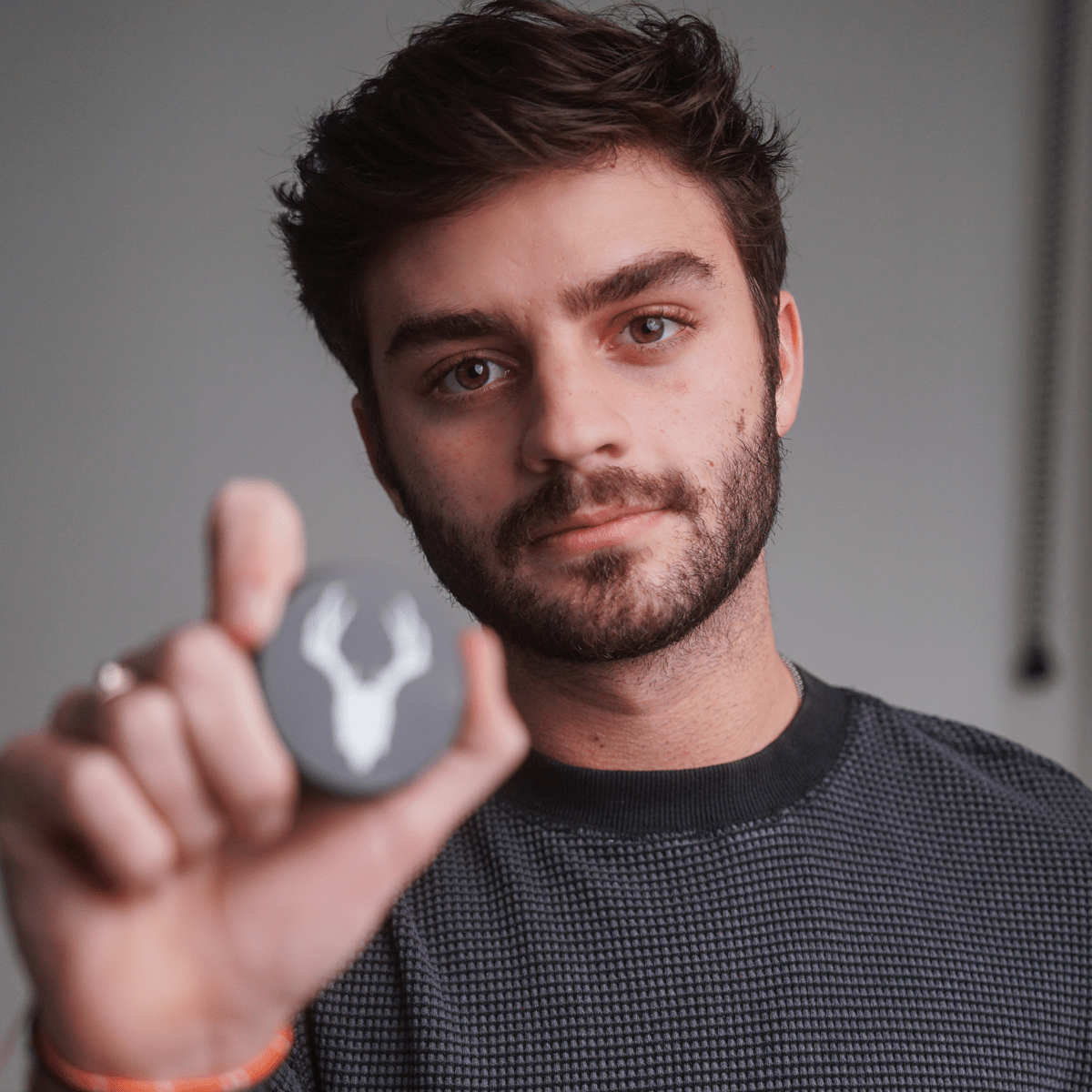
In January 2019, a tattoo Oliver Zak had healed badly. His artist’s advice — slather it in petroleum jelly — bothered him enough that he asked his mother, who had a background in formulating natural products, to help him figure out something better. What they landed on became the first batch of Mad Rabbit tattoo balm, mixed in a crockpot with ingredients Zak and his college roommate Selom Agbitor bought on Amazon.
They were sophomores studying finance at Miami University in Oxford, Ohio. Neither had a manufacturing background, a design degree, or outside money — they’d spent the previous summer running a dropshipping swimsuit business just to learn the mechanics of ecommerce, then sold it once they’d learned enough. What they put into Mad Rabbit was $300 each.
“We started with $300 each, and we were lucky enough to be profitable from week one,” Zak said, recounting the launch on Shark Tank two years later, per CNBC’s reporting.
From dorm-room batches to a Shark Tank deal
For the first several months, Mad Rabbit ran out of Zak’s apartment on High Street, a short walk from campus. He and Agbitor hand-mixed, hand-stickered, and hand-packed every order themselves, skipping classes when order volume demanded it — the kind of unglamorous, manual grind that doesn’t show up in the eventual headline numbers.
It showed up fast enough regardless. By May 2021, Mad Rabbit had already passed $4 million in sales for the year and was on track to close 2021 around $12 million, according to Beauty Independent’s reporting at the time. That March, Zak and Agbitor had pitched on Shark Tank Season 12 and secured a $500,000 investment from Mark Cuban for 12% equity — a deal confirmed by CNBC and covered locally by the Cleveland Jewish News, given the founders’ Ohio ties.
Cuban stayed in as the company kept raising: a $4 million round in February 2022 with Acronym Venture Capital and Revolution’s Rise of the Rest Seed Fund joining him, then a $10 million Series A in March 2023 led by Lucas Brand Equity, with Cuban and H Venture Partners participating and LBE partner Ian Knowles taking a board seat — announced in the company’s own release and covered by trade outlets including BeautyMatter, Happi, and Global Cosmetic Industry. Beauty Independent reported the round put Mad Rabbit’s valuation at roughly $56 million — four times where it stood two years earlier.
The first tattoo brand on Walmart’s shelves
The Series A money went toward retail distribution the founders had been chasing since the start: getting an aftercare category that had lived almost entirely inside tattoo shops and specialty stores onto the same shelves as sunscreen and lotion.
By the summer of 2023, Mad Rabbit had become the first tattoo-care brand ever sold in Walmart, launching in roughly 1,800 stores and expanding to about 1,850 locations — reported by Modern Retail and Global Cosmetic Industry, with the launch also announced via PR Newswire. The brand also expanded into roughly 4,100 GNC locations, adding mainstream retail to a distribution base that already included around 500 independent tattoo shops that stock and recommend the balm directly.
Winning over the industry it was selling to
Retail distance was one obstacle. Credibility with tattoo artists — the gatekeepers who actually recommend aftercare products to their clients — was another, and neither founder had a tattoo industry background to lean on.
Zak described the early skepticism directly to Modern Retail: “It used to be, look at these two Shark Tank kids coming to monetize our industry.” The outlet’s reporting traces how that read shifted over roughly three years, as Mad Rabbit built out an ambassador program with working tattoo artists, sponsored conventions, and put artists’ work in front of its own audience rather than only using them as a sales channel. Zak credited that reciprocity — giving artists a platform, not just a shelf slot — for the industry’s turn from suspicion toward what he described as broad acceptance at conventions.
What the story is actually about
Strip away the Shark Tank drama and the retail numbers, and Mad Rabbit is a case study in a narrower, more repeatable idea: two students noticed a real product gap in a category nobody was taking seriously, tested it on themselves and their own friends before spending real money, and grew slower than the headlines suggest before the funding rounds made it look fast. The dropshipping business the summer before wasn’t a footnote — it was where they learned the ecommerce mechanics that let them execute once the product itself was right.
Both founders were named to Forbes’ 30 Under 30 list, recognition covered by their alma mater’s regional business press, the Greater Cleveland Partnership. Zak still frames the company’s growth the way he did in its first year: profitable, deliberately, from the start — not funded into existence.
Related founders
- Four Products, $1.99: How Damon Chen Turned Failure Into a $2M Bootstrapped Business — another founder who built past repeated failed side projects before finding the product that worked.
- How to Build a Raving Fan Base — Without Hype or Manipulation — the retention research behind why Mad Rabbit’s artist-ambassador approach, not just its retail footprint, is doing real work.
Quotes and figures are drawn from Oliver Zak’s remarks reported by CNBC (2021) and Modern Retail; sales and funding figures from Beauty Independent and the company’s own Series A announcement, corroborated by BeautyMatter, Happi, and Global Cosmetic Industry; Walmart and GNC distribution from Modern Retail and Global Cosmetic Industry; founding-story details from Shopify’s reporting and Entrepreneur.com; Forbes 30 Under 30 recognition via the Greater Cleveland Partnership.
Frequently asked
Who founded Mad Rabbit?
Oliver Zak and Selom Agbitor, who met as students at Miami University in Oxford, Ohio, co-founded Mad Rabbit in 2019. Zak serves as CEO; Agbitor serves as Chief Revenue Officer.
How did Mad Rabbit start?
After getting a tattoo that healed poorly on the petroleum jelly his artist recommended, Oliver Zak worked with his mother to formulate an all-natural tattoo balm, which he and Selom Agbitor first mixed in a crockpot using ingredients bought on Amazon. They launched with $300 each in January 2019 and were profitable from their first week.
How much has Mad Rabbit raised, and who invested?
Mad Rabbit received a $500,000 investment from Mark Cuban on Shark Tank in 2021, followed by a $4 million round in early 2022 and a $10 million Series A in March 2023 led by Lucas Brand Equity, with Cuban, H Venture Partners, and Acronym Venture Capital also participating.